The one-room apartment party plan
Hosting in one small room? Use one-phone PartyStart games, short rounds and a layout that keeps people moving without props or awkward seating.
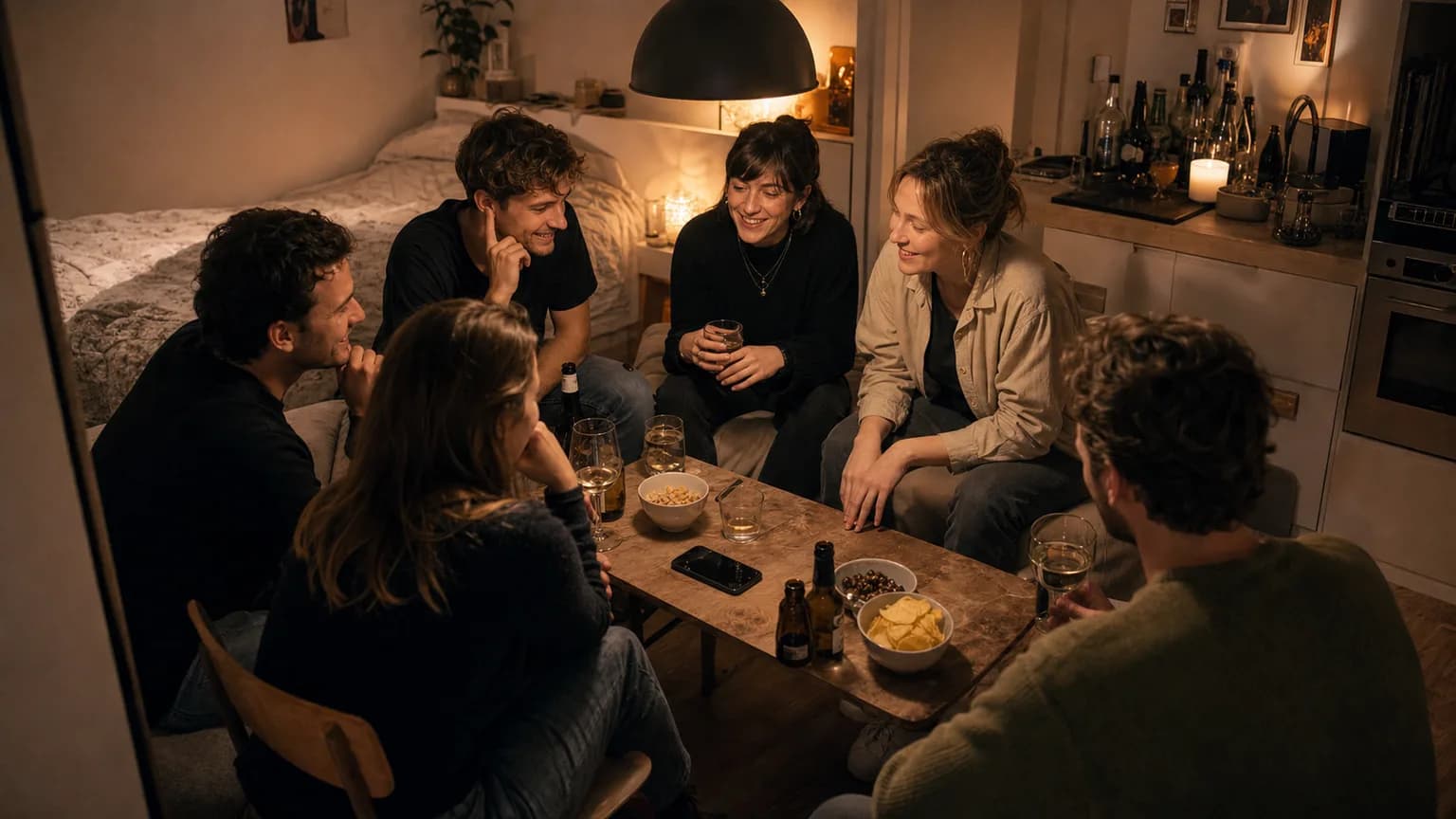
A small apartment party can be better than a big house party, but only if you stop pretending the room is bigger than it is. You do not have separate zones, a giant table or space for games that need movement. You have one room, one speaker, one place where everyone ends up standing and usually one phone that can save the night.
The plan is simple: keep the room flowing and choose games that do not need props.
Set up for movement, not seating
Too many chairs turn a small apartment into a waiting room. Keep a few seats, but leave standing space near drinks and snacks. Put bags and coats away from the main path. If people can move two steps without climbing over someone, the party already feels better.
Use one obvious surface for drinks and one for the phone when a game starts.
Choose one-phone games
Small rooms are bad for games that need props, teams running around or long turns. They are great for prompt games, voting games and quick randomizers.
Good options:
- Party Talk when people arrive.
- Most Likely To when the room needs a laugh.
- A randomizer for turns, challenges or choosing music.
- Score Card for tiny competitions.
- Truth or Dare only when the group is comfortable.
The phone should act like the deck, not like the host's private screen.
Keep rounds short
In one room, everyone feels the energy shift quickly. If a game drags, the whole party feels stuck. Try five-minute rounds and switch before people get bored. A short game that ends too soon is better than one that traps the room.
Use natural breaks: someone arrives, drinks need refilling, food appears, music changes.
Avoid the crowding problem
Do not make everyone stare at one tiny screen for too long. Read prompts aloud, place the phone in the middle or pass hosting between people. If the group is bigger than eight, split into quick teams or make the game about voting rather than individual turns.
PartyStart route
Start with PartyStart Tools. Pick games that work without cards, space or preparation. If the group cannot decide, use a wheel or dice tool. If you need teams, use Team Maker. Small apartment parties work best when the game fits the room instead of fighting it.
Keep every round small
A one-room party gets awkward when the game needs more room than the apartment has. Choose formats where people can stay seated or stand close to the table. The phone should be easy to see, but it should not become a bottleneck.
Short rounds matter because people need to move for drinks, coats, bathroom breaks and fresh air. If a game can pause after three prompts, it fits the room. If it needs a long setup, save it for another place.
One practical host rule
Do not let the game block the room. If people need to cross the whole apartment to join, the format is too heavy. Keep the phone near the drinks or main table so the game supports the party instead of rearranging it.
Host checklist
- One clear table for drinks and the phone.
- Coats and bags out of the walking path.
- Games that work seated or standing still.
- Short rounds with no props.
- A music volume that does not force shouting.
Practical flow
- 1
Create one shared surface
Keep this step short and easy to leave between rounds.
- 2
Use prompts
Keep this step short and easy to leave between rounds.
- 3
Use voting
Keep this step short and easy to leave between rounds.
Use Party Talk
This PartyStart tool fits the article moment and keeps the group moving without extra setup.
Open toolFAQ
When should you start?
Start at the first energy dip, before the room becomes fully quiet.
What if not everyone wants to play?
Use short rounds and let people watch or join later. Low pressure works better than forcing it.
Related guides
PartyStart app
Ready to start something?
Use the guide to prepare the party. Open PartyStart when the room needs a game, prompt or fast decision.